Mystical Mandala Vol.24: A Graphic Designer's Practical Review
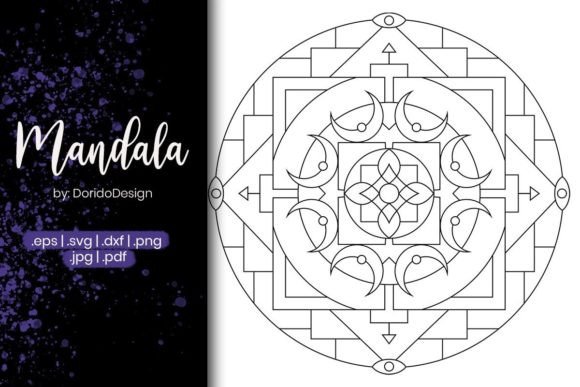
When a new design asset arrives on your screen, the first question isn’t about its file format or resolution, but its potential. Does it have the character to elevate a client’s project? Opening Mystical Mandala Coloring Page Vol.24, my immediate impression is one of intricate calm. This isn’t a chaotic burst of pattern; it’s a deliberate, balanced illustration that whispers a sense of mindful artistry. It feels inherently handmade, even in its digital form, leaning towards styles that value detail, symmetry, and a touch of spiritual or natural aesthetic. For a designer reviewing this for real client work, it naturally fits projects for wellness brands, artisanal product lines, mindful lifestyle bloggers, or any creative venture aiming for an organic, crafted visual mood.
Beyond the Coloring Page: A Versatile Core Graphic
The product description mentions its use as a coloring-in page, but as a professional designer, I see its raw form as a powerful, versatile graphic design asset. In a recent project for a small business launching a line of herbal teas, we needed a visual motif that conveyed purity and natural rhythm. Mystical Mandala Coloring Page Vol.24 became the cornerstone. Its intricate lines provided a perfect decorative frame for product labels, a subtle background texture for the packaging design, and a refined accent for social media graphics announcing the launch. It supported the brand identity without overwhelming it, adding polish where a simpler shape might have felt bland.
Where This Mandala Design Excels in Client Projects
This asset performs remarkably well in applications where detail is appreciated and scale is generous. Think large layout areas: the hero graphic on a website for a yoga studio, a full-page backdrop in editorial design for a mindfulness magazine, or a central element on a poster for a local wellness festival. Its complexity becomes a feature, not a flaw. It’s excellent for product mockups when applied to items like tote bags, mugs, or journal covers through sublimation design or as a print-on-demand graphic—the detail translates into a premium feel. As a decorative accent, it can elevate invitation suites for weddings or retreats, create unique sticker designs for a handmade business, or serve as a recurring visual in a themed campaign for a seasonal product launch. It brings a cohesive, visual hierarchy to projects that need a central, ornate element to anchor simpler typography and supporting content.
Caution Areas: Where Detail Can Become Distraction
However, this mandala requires careful application in certain contexts. In small sizes—think as a tiny logo on a business card or a favicon—the intricate lines will collapse into a muddy, unrecognizable blob. Avoid using it in crowded layouts or on complex backgrounds; it needs space and a clean, contrasting field to breathe. Its style is inherently opposite to minimalist branding or stark, corporate materials. For projects demanding ultra-clean visual hierarchy and immediate, bold communication, this asset would clash, potentially undermining the professionalism and visual trust you’re trying to build. The emotional appeal is specific: it engages an audience looking for depth and artistry, not sheer speed or corporate clarity.
The Designer’s Practical Checklist Before Client Use
Before committing this asset to a paid client project, I run a series of practical tests. First, I test it in black and white to ensure the pattern holds its form without color dependency—crucial for printing cost considerations. I check its contrast on both light and dark backgrounds to confirm it remains legible. Previewing it at both small and large sizes on actual product mockups (like a t-shirt design or a website header) reveals its functional limits. If the file includes an SVG, I inspect the vector editability to see if I can easily adjust colors or isolate sections for a custom Cricut project or Canva template integration.
I always test print quality at a high resolution, as fine lines can sometimes bleed if the file isn’t optimized. Reviewing the provided file formats (PNG, SVG, etc.) is essential; a clean PNG transparency allows for seamless layering in social media graphics or digital ads. Crucially, I compare the mandala with different font styles to ensure typographic harmony. It pairs beautifully with clean sans serif fonts for modern balance, elegant script fonts for a romantic touch, or even certain display fonts. It can conflict with busy serif fonts. Finally, and most importantly, I confirm the commercial license terms. Using it for a client’s brand identity, marketing visuals, or Etsy product line requires unambiguous permission for commercial use.
Final Judgment: A Polished Asset for Specific Creative Directions
Mystical Mandala Coloring Page Vol.24 is more than a simple coloring page; it’s a ready-made engine for a specific kind of creative design. It won’t fit every project in your portfolio, but for the ones that align with its mood—projects seeking an aura of craftsmanship, mindfulness, or intricate beauty—it is a tremendous time-saver and a quality booster. It helps a final design feel more cohesive and polished, providing a layer of visual sophistication that a small business or handmade brand might struggle to create from scratch. In the toolkit of a designer serving niche, aesthetic-driven clients, this is a commercial design asset worth having. Its value lies not just in its beauty, but in its tested adaptability across printable designs, packaging details, and digital product visuals, elevating the overall impression from amateur to artisan.